
Tips to Enhance Used Oil Distillation Plants’ Operating Profits
Written By: Mr.Ran
Senior Petrochemical & Waste Oil Recycling Engineer
Deeply involved in the design, manufacturing, and optimization of various waste oil recycling and petrochemical equipment, delivering practical and efficient solutions for clients worldwide.
In the industrial oil regeneration sector, project success is defined by more than just the ability to turn dark waste oil into a clear product; it is defined by the bottom line. For investors managing large-to-medium scale refineries, small gains in operational efficiency often translate into hundreds of thousands of dollars in annual profit variance. A high-performance used oil recycling plant can only deliver its full economic potential when it is supported by systemic optimization. This article examines the core variables that drive profitability in a modern distillation facility.
Energy Recovery and Thermal Efficiency
Energy consumption constitutes the biggest OPEX factor in distillation. In conventional plants, considerable amounts of thermal energy are wasted due to the cooling of oil vapors, thereby directly decreasing the bottom line.
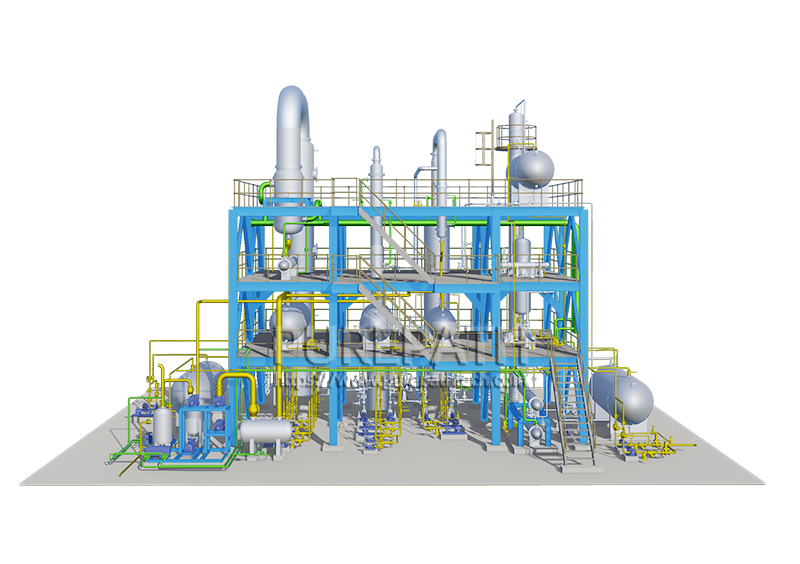
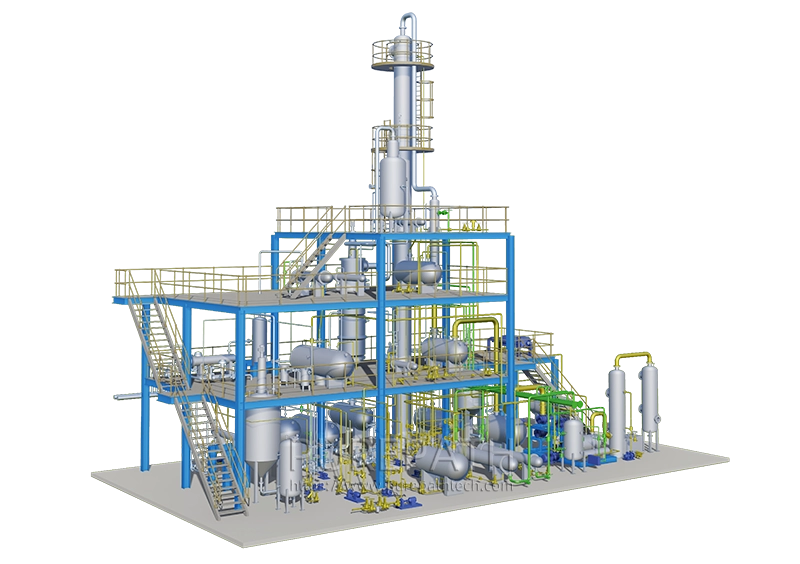
- Thermal Integration Technique: Modern design features multistage heat exchangers that extract heat from hot oil vapors to warm up the incoming cold feed.
- Bottom Line Effect: The reduction in heating load on the main heater will be 20% to 30%.
- Value Over Time: Within the lifespan of 10-15 years, the savings in fuel costs may easily exceed the cost of the equipment itself.
Transitioning to Continuous Feeding Processes
When investors aim to achieve commercial-level production, the selection of the process determines the “limit” for the amount of income that can be earned from this venture. This is illustrated by the table below:
| Metrics | Batch Processing | Continuous Feeding | Impact on Profitability |
| Daily Throughput | Limited by heating/cooling cycles | 24/7 non-stop operation | Continuous plants yield 2-3x more volume |
| Energy Efficiency | High loss due to frequent restarts | Constant temperature, stable load | Significant reduction in cost per liter |
| Labor Costs | Requires manual intervention per batch | High automation, minimal oversight | Lowers long-term OPEX |
| Product Consistency | Risk of variance between batches | Homogeneous quality standards | Commands higher market premiums |
Maximizing Yield with High Vacuum Stability
The large hydrocarbon chains that comprise the components of used oil have high thermal sensitivity. In the event that the distillation pressure is too high, the temperature will have to be increased for the oil to vaporize, hence resulting in “thermal cracking.”
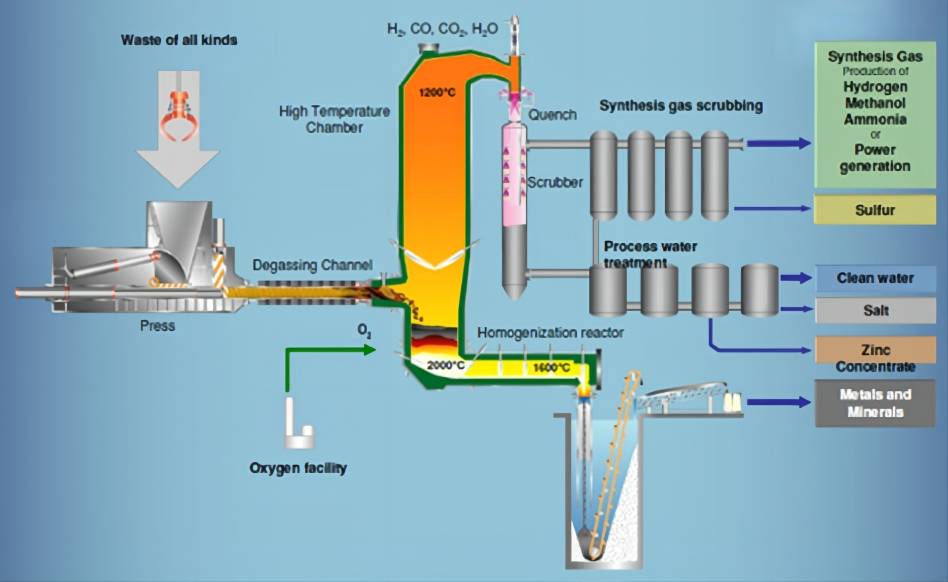
Thermal cracking does not result in condensation; rather, it results in the formation of byproducts in the form of gases and carbon deposits (coking), thereby necessitating costly maintenance stoppages. The deep vacuum established by a professional used oil recycling system allows for separation at low temperatures, ensuring the preservation of the oil’s molecules, thus maximizing its base oil output.
Quality Control via Advanced Refining Stages
The market price for the base oil is hierarchical. Basic used oil distillation usually results in products that can only be used as low-quality fuel oils, with thin profit margins. Higher prices are obtainable with upgrades in the quality of the oil.
- Polishing/Deodorization: Through solvent refining or fixed bed hydro-treating process, polar substances and odor will be removed.
- Grade Upgrading: Changing a basic industrial oil to a Group II/II+ standard base oil.
- The Economics of Return on Investment: While adding additional processing units raises the overall capital cost, the premium on Group II oils by several hundred dollars per ton dramatically lowers the return-on-investment cycle.
The Strategic Advantage of EPC Delivery
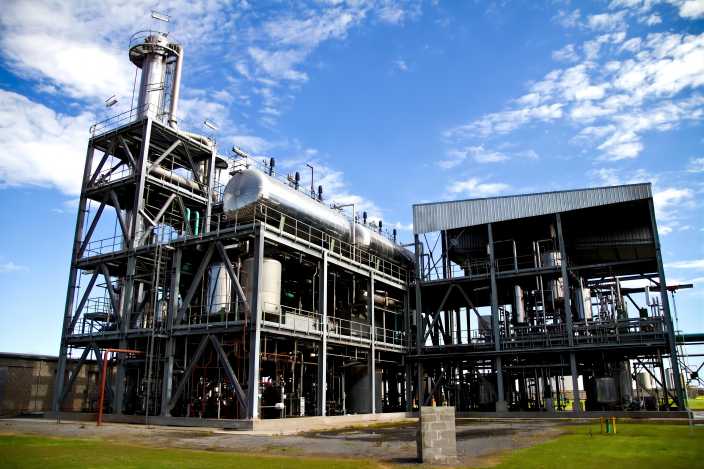
Many refinery projects fail during the commissioning phase because components from different vendors—pumps, columns, and control systems—do not synchronize effectively.
The EPC (Engineering, Procurement, and Construction) model is a strategic tool for risk mitigation. When a single engineering entity manages the entire process package, they ensure that mass and heat balances are optimized at the system level. This “turnkey” approach eliminates compatibility issues and avoids the hidden costs associated with extended commissioning delays and site modifications.
FAQ: Insights for Oil Recycling Investors
Question 1: What is the period before you begin seeing profits from the oil distillation machine?
Answer: The time taken will be mainly influenced by the amount of daily output and the difference between the cost price and the selling price of the crude oil. Large capacity and energy recovery processes tend to have a return on investment after 18-24 months.
Question 2: Does continuous machinery need a good quality of feedstock?
Answer: Not always. If there is a strong pretreatment stage to get rid of impurities and water from the feedstock, the continuous process performs excellently in processing different types of used oil.
Question 3: Do environmental requirements affect profit margins negatively?
Answer: Although initial investments are higher because of the environmental considerations, in the long run, it is an essential requirement. Closed-loop systems minimize losses incurred due to solvent loss while minimizing the risks of incurring fines.